Steven Williamson
Analyst · Citi
Thanks, Elizabeth. Good afternoon, everyone, and welcome to our first quarter 2024 earnings call. Here with me is Mehul Joshi, our Chief Financial Officer.
I am pleased to report that Pulmonx delivered $18.9 million in worldwide sales in the first quarter of 2024, representing 30% growth over the same period last year and 29% on a constant currency basis. We're excited to see such strong momentum early in this year, which leaves us increasingly confident in our ability to deliver on our previously communicated revenue guidance of $81 million to $84 million for the full year 2024. Our Q1 results reflect our team's continued success in executing a comprehensive strategy to drive long-term sustainable growth, and I look forward to sharing with you today key updates on our progress.
Before detailing our performance and key priorities, I'd like to speak about some of the recent leadership changes at Pulmonx. First, I'd like to congratulate Glen French on his retirement and thank him for his innumerable contributions to the company, and the interventional pulmonology more broadly, through his long tenure in the space and while serving as our CEO. Glen and I have worked closely over the last few months to ensure an exceptionally smooth transition, and I look forward to our continued collaboration as he maintains his position on our Board of Directors.
Second, I'd like to welcome Mehul Joshi to our team. Appointing an accomplished financial executive as CFO was a high priority for our Board and myself, and I'm delighted to have hired an experienced industry veteran for the role. Mehul brings a depth of knowledge leading global finance teams within high-growth companies, such as Gilead and ResMed, as they scale revenue and operating leverage. I'm thrilled to be working alongside him and our broader leadership team to drive Pulmonx into its next phase of growth. I'd also like to take the opportunity to thank John McKune for serving as our Interim CFO, and I look forward to his continued contributions as our VP and Corporate Controller.
Before we discuss the details of the quarter, I'd like to share a bit of my background and why I'm so excited to be leading Pulmonx through this next growth phase. I've spent nearly 3 decades leading teams that have helped revolutionize patient care across large markets with transformational technologies. More specifically, I've led large diversified businesses at Hologic, CR Bard and Becton, Dickinson as well as cross-functional teams at high-growth companies such as Outset Medical. Across each role, I focused on understanding customer needs, developing a strong cadence of new product development and driving rapid global market adoption.
As I evaluated the Pulmonx opportunity, I focused my diligence on three pillars: first, does the company serve a large patient population with significant unmet needs; second, is its solution a highly impactful, transformative technology with a demonstrated clinical and economic value proposition; and third, has the company developed a foundation for long-term success. Through the last 1.5 months as CEO, I've collectively affirmed what I learned in my diligence, that Pulmonx checks each of these three boxes.
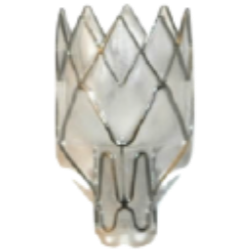
First, Pulmonx is focused on a large underserved patient population with limited treatment options. More specifically, we estimate that approximately 1.2 million patients with severe emphysema stand to benefit from the Zephyr Valve treatment resulting in a global addressable market of approximately $12 billion. This represents our opportunity today and does not account for the incremental market opportunity associated with AeriSeal, which we expect has the potential to expand our total addressable market by up to 20% globally.
Patients with severe emphysema face a progressive disease that significantly limits their day-to-day activity. Many live with chronic breathlessness that robs them of the ability to do basic life activities and puts them on a downward spiral of deconditioning, which increases their risk of mortality. Current treatment options include medical management and pulmonary rehabilitation, both of which show limited long-term efficacy, as well as highly invasive treatments such as lung volume reduction surgery or lung transplantation, which both present significant morbidity and mortality risks. This obvious gap in the treatment spectrum resonates with me given my experience developing and expanding markets while altering the standard of care with transformative new technologies, just as we're doing with Zephyr Valves.
I am confident that we will be successful because patients undergoing minimally invasive treatment with Zephyr Valve show significant durable benefits as validated by 4 randomized clinical trials and over 100 scientific articles. These data, which have been validated by real-world outcomes and have served as the basis for broad payer coverage and inclusion in key treatment guidelines, demonstrate that patients treated with Zephyr Valve experienced clinically meaningful and statistically significant improvements in lung function, exercise capacity and quality of life compared to medical management alone.
In summary, I took this opportunity at Pulmonx because it is clear to me just how impactful the Zephyr Valve treatment can be for so many patients and because I view the company is well positioned operationally and financially to execute a successful long-term growth strategy.
As I look ahead, I'm excited to leverage the expertise of our entire team whose collective experience in interventional pulmonology and dedication to our mission to deliver on our commitments as the global leader in minimally invasive treatments for COPD is unparalleled.
With that said, I'd like to pivot back to our first quarter performance, my early perspectives on our strategy and our team's key priorities for 2024.
As I mentioned earlier, Pulmonx delivered $18.9 million in worldwide sales in the first quarter of 2024, representing 30% growth over the same period last year and 29% on a constant currency basis. As expected, growth was primarily fueled by our success in the United States where the team has been laser-focused on executing the commercial strategy. Specifically, our team has been focused in three areas: first, training physicians at hospitals that have the potential to be high-performing Zephyr Valve centers; second, facilitating the sharing of best practices among existing centers to optimize their Zephyr Valve programs; and third, building local awareness of the benefits of our treatment among COPD physicians and patients.
Based on my early experiences in the field and our recent success, I am increasingly confident in our ability to drive sustainable growth with this three-pronged strategy. Over the coming weeks and months, I intend to work closely with the team to design recent specific strategies that will serve to optimize the building blocks we have in place. I look forward to providing more detail on these perspectives in the near future.
Regarding new Zephyr Valve centers, we added 9 new centers in the U.S. in the first quarter of 2024, bringing our total number to 346. Of these, 253 were active accounts, having placed a revenue-generating order in the first quarter, which is in line with our expectations. We'll continue to identify potentially high-performing Zephyr Valve centers and expect to opportunistically establish new accounts with a focus on driving utilization in our active accounts.
The team continues to establish our Zephyr Valve treatment as a more routine procedure, particularly through the sharing of best practices of our higher utilization treatment centers. We're seeing an increasing number of Zephyr Valve hospitals investing in dedicated staff to help screen prospective valve candidates as well as instituting procedures to routinely identify patients whose test results indicate they may ease up for valve candidates. Additionally, we're piloting programs that will enable customers to optimize patient workflow, resulting in reduced time to treatment, improved patient experience and greater capacity for centers to evaluate more patients. Collectively, these efforts have led to sustained year-over-year improvement in the average number of cases per active center, and we expect to continue benefiting from year-over-year gains on an annualized basis moving forward.
Lastly, our cost-efficient education efforts aim to inform patients and providers on the benefits and availability of our treatment, particularly in geographies with already well-developed Zephyr Valve programs. We continue to identify and engage high-volume COPD physicians and have launched several field-based education programs, which have garnered early traction. We're also focusing on supporting patients who are seeking to learn more about Zephyr Valves and find a treatment center more rapidly while enhancing our digital geofencing tactics to identify and educate additional prospective patients who may benefit from Zephyr treatment based on search trends.
Our confidence in these strategies has been reinforced by early success over recent quarters in driving improved engagement and reduced acquisition costs across ongoing pilot programs in select geographies, thereby demonstrating that we have the right playbook and that there is even more room to grow even within our top cohort of accounts.
As we look ahead, we'll continue to deploy resources and tactics strategically on an account-by-account basis, ensuring that critical success pieces are in place within a given geography before investing more heavily in local awareness campaigns.
While our primary commercial focus remains on growing our U.S. business, we continue to see substantial growth opportunity internationally. In Europe, over the course of the last 3 quarters, we've been making substantial enhancements to our field team and management capabilities. In addition, we've been taking many of the sales tools we've developed for use in the U.S. and adapting them for use in European markets, such as operational best practice sharing, community physician engagement and peer-to-peer education programs.
As a result of these changes, we saw our international business grow as a whole in Q1 by 15% year-over-year and 24% in our top geographies of Germany, France, U.K. and Spain. We anticipate the impact of our international efforts to become increasingly evident in 2025 as we focus on foundation building this year.
In addition to our commercial efforts outside the United States, I am excited to announce the treatment of the first patient in our Japanese post-market approval study. We're encouraged by the positive reception of our technology at the recent Japanese Respiratory Society meeting and the growing interest among centers to join in the post-approval study. As a reminder, we anticipate it will take time to grow awareness of this new treatment option, and we expect the bulk of enrollment to occur in the back half of the enrollment period as we train additional sites and move the first patients through the treatment funnel.
We do not expect a material revenue contribution from Japan until approximately 2026 when we were able to commercialize more broadly. This study marks an essential step towards broader commercialization and a new market where we estimate approximately 100,000 patients stand to benefit from Zephyr Valves.
We have also continued to make progress toward our goal of expanding the number of patients that can be treated with Zephyr Valves following receipt of IDE approval for our 200-patient CONVERT II pivotal trial from the FDA. In February, we announced the treatment of the first patient in the trial, a multicenter global study evaluating the safety and effectiveness of the AeriSeal system in limiting collateral ventilation in severe COPD/emphysema patients. We currently expect to enroll through approximately the end of next year.
Patients who experienced conversion to CV-negative status following AeriSeal treatment will then be implanted with Zephyr Valves per current standard of care for lung volume reduction. Conversion success rate, lung volume reduction success rate and other clinical parameters will be evaluated at 6 months post-valve placement and will be used to support our PMA application.
We also look forward to the presentation of final data from our CONVERT I study following enrollment completion last year. We expect these data to be presented at the European Respiratory Society Congress in early September in Vienna.
In conclusion, we are pleased with our Q1 performance, excited for our growth outlook in 2024 and encouraged by the progress we've made with our market development campaigns and the AeriSeal clinical development program.
In the time I've been with Pulmonx, my experience has validated my initial confidence in the significant market opportunity for our treatment, the benefits realized by patients receiving Zephyr Valves and the commercial foundation already in place. I look forward to working with our leadership team to continue to execute on our strategy, identify opportunities to accelerate growth and to achieve profitability.
Now I'll turn the call over to Mehul to provide a more detailed review of our first quarter results.