
Operator
Operator
Good day, and welcome to the Milestone Scientific Inc. 2018 Second Quarter Investors Conference Call. Today’s conference is being recorded. At this time, I would like to turn the conference over to Natalya Rudman. Please go ahead.
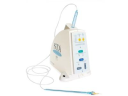
Milestone Scientific Inc. (MLSS)
Q2 2018 Earnings Call· Wed, Aug 15, 2018
$0.44
+2.66%
AI summary not available yet
Be the first to generate an AI summary of this earnings call. Takes about 20 seconds, and the result is saved and available to everyone afterwards.
Same-Day
-1.23%
1 Week
-2.82%
1 Month
+6.06%
vs S&P
+3.38%
Operator
Operator
Good day, and welcome to the Milestone Scientific Inc. 2018 Second Quarter Investors Conference Call. Today’s conference is being recorded. At this time, I would like to turn the conference over to Natalya Rudman. Please go ahead.
Natalya Rudman
Management
Thank you, Lisa, and good morning, everyone. Thank you for joining Milestone Scientific second quarter 2018 financial results conference call. On the call with us today are Leonard Osser, Interim Chief Executive Officer and Joseph D’Agostino, Chief Financial Officer and Chief Operating Officer. The company issued a press release yesterday, Tuesday, August 14 containing second quarter 2018 financial results, which is also posted on the company’s website. If you have any questions after the call or would like any additional information about the company, please contact Crescendo Communications at 212-671-1020. The company’s management will now provide prepared remarks, reviewing the financial and operational results for the second quarter ended June 30, 2018. Before we get started, we would like to remind everyone that during this conference call we may make forward-looking statements regarding timing and financial impact of Milestone’s ability to implement its business plan, expected revenues and future success. These statements involve a number of risks and uncertainties and are based on assumptions involving judgments with respect to future economic, competitive and market conditions and future business decisions. All of which are difficult or impossible to predict accurately and many of which are beyond Milestone’s control. Some of the important factors that could cause actual results to differ materially from those indicated by the forward-looking statements are general economic conditions, failure to achieve expected revenue growth, changes in our operating expenses, adverse patent rulings, FDA or legal developments, competitive pressures, changes in customer and market requirements and standards, and the risk factors detailed from time-to-time in Milestone’s periodic filings with the Securities and Exchange Commission, including without limitation Milestone’s report on Form 10-K for the year ended December 31, 2017 and Milestone’s report on Form 10-Q for the second quarter ended June 30, 2018. The forward-looking statements made during this call are based upon management’s reasonable belief as of today’s date, August 15, 2018. Milestone undertakes no obligation to revise or update publicly any forward-looking statements for any reason. And with that out of the way, we will now turn the call over to Leonard Osser, Chief Executive Officer. Please go ahead, Len.
Leonard Osser
Chief Executive Officer
Thank you, Natalya and thanks to everyone for joining us today. Starting first with our CompuFlo Epidural system, in just a few months we have expanded our network to eight independent distributors covering key markets across the U.S. including the Pacific Northwest, Southeast, Southwest, Midwest, Northwest, and Mid-Atlantic regions. Our rapid progress is due to our new decentralized sales strategy, whereby we are targeting independent distributors with existing physician and hospital relationships within their respective territories and clinical specialties. The positive response we have been receiving illustrates the growing market demand as we educate distributors and leading anesthesiologists on the clinical benefits of the CompuFlo Epidural system. It’s important to note that it takes time for these distributors to ramp up as they start by performing demonstrations and then work on securing agreements with the appropriate physicians and healthcare systems. We are now in discussions with additional distributors and look forward to announcing similar agreements in the coming weeks and months. Importantly, we are on track to have our clinical trials published in select industry journals later this year, which should also help drive market adoption; reasonable belief as of today’s date August 15. Last month we announced that the CompuFlo Epidural system was featured in anesthesiology research and practice, a prominent peer-reviewed scientific journal that provide a forum for healthcare professionals engaged in perioperative medicine, critical care and pain management. The CompuFlo Epidural system was selected to objectively measure and evaluate the integrity of a third-party epidural simulator in real time. The CompuFlo Epidural system continues to receive positive feedback from key opinion leaders worldwide. We believe this further illustrates that CompuFlo is becoming accepted as the best-in-class for its ability to measure tissue density and accurately identify the tip of the needle in real time for the first time. In June we presented at Euroanaesthesia 2018. The European Anesthesiology Congress which was held in Copenhagen. Euroanaesthesia is Europe’s largest annual event showcasing products in the field of anesthesia, perioperative medicine, intensive care, emergency medicine and pain treatment. This international event gathers upwards of 6,000 delegates from around the world. We presented three abstracts during the scientific poster session highlighting the CompuFlo’s ability to objectively identify the epidural space in real time. The CompuFlo Epidural system was well received with very positive feedback from a number of global distributors as well as key opinion leaders. We are in active discussions from the leads that we generated from this event as we accelerate our sales and marketing activities in Europe and other markets throughout the world. Last month we announced that the CompuFlo Epidural system was featured in anesthesiology research and practice, a prominent peer-reviewed scientific journal that provide a forum for healthcare professionals engaged in perioperative medicine, critical care and pain management. The CompuFlo Epidural system was selected to objectively measure and evaluate the integrity of a third-party epidural simulator in real time. The CompuFlo Epidural system continues to receive positive feedback from key opinion leaders worldwide. We believe this further illustrates that CompuFlo is becoming accepted as best-in-class to measure tissue density and accurately identify the tip of the needle in real time. In June, we – excuse me, sorry. Turning now to our dental business. We experienced some weakness within our dental division in the second quarter of 2018 due to the fact that we did not recognize revenue sales to Milestone China as well as the timing of orders from Henry Schein last year. However, we did see an increase of approximately 66% in international dental revenue excluding China that the three months ended June 2018 compared to 2017. Overall we anticipate some continued lumpiness in the dental business quarter-to-quarter, due to the timing of orders in the number of countries. However, we remain encouraged by the outlook for the full year and anticipate our dental division will continue to generate steady growth and maintain solid margins. At this point, I would like to turn the call over to our CFO, Joseph D’Agostino, to go over the financials in detail. But I will be back at the conclusion of Joseph’s discussion. Joseph D’Agostino: Thank you, Len. Revenue for the three months ended June 30, 2018 was $2.4 million versus $2.5 million for the second quarter of 2017. Domestic sales decreased by approximately $231,000 in 2018. The decrease in revenue was due in part to advanced purchases from Henry Schein in the fourth quarter of 2017, in anticipation of planned price increases in 2018. Additionally, total revenues during the three months ended June 30, did not include sales to Milestone China, compared to approximately $356,000 in sales to Milestone China for the three months ended June 30, 2017. Excluding China, international dental revenue increased approximately $492,000 for the three months ended June 2018 compared to 2017. Medical sales for the three months ended June 30, 2018 and 2017 were 39,600 and zero respectively. The second quarter 2018 sales were to two international distributors, primarily for demonstration and training purposes, which reflects our strategy to initially place the instruments through key distributors with top KOLs in order to see the market and drive product awareness. Gross profit for the second quarter of 2018 was $1.4 million or 58% of revenue versus $1.7 million or 65% of revenue for the second quarter of 2017. The decrease and gross profit percentage for the three months ended June 30, 2018 is due to an allowance for slow moving medical inventory of about $290, 000. Our operating loss for the three months ended June 30, 2018 was $1.4 million versus an operating loss of $1.6 million for the same period last year. Net loss applicable to common stockholders for the second quarter of 2018 was $1.3 million or $0.04 per share versus a net loss of $1.5 million or $0.05 per share for the comparable period in 2017. Revenue for the six months ended June 30, 2018 was $4.2 million versus $6.2 million for the second quarter of 2017. Domestic revenue for dental business decreased by approximately $1 million during the six months ended June 2018 as compared to 2017, which was related to the advanced purchases from Henry Schein in the fourth quarter of 2017; however, domestic sell-through imports on healthy [ph] sales in the second quarter of 2018 continues to be strong. Instrument sales were down due to a manufacturing delay related to delivery of instruments which has been resolved. Additionally, total revenues during the six months ended June 30, 2018 did not include sales to Milestone China compared to approximately $1.4 million in sales to Milestone China for the six months ended June 30, 2017. International dental revenue excluding China increased approximately $407,000 for the six months ended June 2018 compared to 2017. So when we’re taking out the effects to Milestone China, we have – actually saw a meaningful increase in year-over-year international sales. Gross profit for the first six months June 30, 2018 was approximately $2.6 million or 63% of revenue versus $3.9 million or 63% of revenue for the second quarter of 2017. Operating loss for the six months June 30, 2018 and 2017 was approximately $3.4 million and $2.1 million respectively, an increase of approximately $1.3 million. This increase is primarily attributable to a reduction in the gross profit and an increase in selling expenses and administrative expenses. Net loss applicable to common stockholders for the six months ended June 30, 2018 was $3.2 million, or $0.09 per share, versus a net loss of $2 million or $0.06 per share for the comparable period in 2017. Now, I would like to turn our attention to the liquidity and capital resources. At June 30, 2018, the company had cash and cash equivalents of approximately $900,000, total current assets of approximately $11 million and working capital of $2.9 million. We believe that our cash on hand accounts receivable and revenues from the dental business will be sufficient to operate the ongoing business for at least 12 months provided that our projected sales and cash collections are achieved as forecasted. At this point, I would like to turn the conversation back to Leonard Osser.
Leonard Osser
Operator
Thank you, Joseph. Within our medical division, we’re adding new distributors and have received favorable feedback in the market from key opinion leaders, physicians and hospital networks. We expect to start seeing the beginning of ramping up of sales in our medical division in the fourth quarter. So to wrap up, we’re very encouraged by the outlook for the business and look forward to announcing additional developments as they unfold. As we invest heavily in developing the epidural market, keep in mind that our company strategy is the validation of our technology in various medical sectors with the goal of partnering, licensing or selling all of that specific product to a larger company. This will allow us primarily to fund our growth in other areas of injection technology through a wide range of devices and their related disposables. I’d like to thank you for joining the call today. At this point, we would like to open the call to questions.
Operator
Operator
Thank you. [Operator Instructions] And we will take our first question from Anthony Vendetti from Maxim Group. Please go ahead.
Anthony Vendetti
Analyst · Maxim Group. Please go ahead
Yes, thank you. So I was just wondering on the dental business. Leonard, if you can just talk a little bit about, I know there’s lumpiness there, but do you think most of the weakness, especially if you exclude China, international, do you think most of that is just third quarter weakness or do you think there’ll be some lumpiness in the fourth quarter as well? Joseph D’Agostino: Okay. This is Joseph, responding Anthony. I think that as far as we can see in the domestic side are this is a hand piece as I mentioned in the presentation, is strong and moving forward, increasing over last year’s rate of use. I’m some talking sell-through not sell-in. So that’s a very good picture for us, which means Henry Schein will be purchasing more of our hand pieces to continue that growth. On the instrument sales, it was a little lumpy because of delivery from our manufacture which we have primarily resolved, but there could be a little bit of an up and down swing there just because of delivery time. However, we’re moving forward again. We’ve got at this point probably, I don’t have exactly from me, any more transactions which are conferences attended by individuals, but we have hand-on practicing technicians teaching dentists at trade shows or other CE, continuing education events on how to use the instrument. So we think that’s going to help, but there’s always a lag between our actually our sell-in through the sell-through and then the reordering process. So I don’t think it’s going to be dramatic but there could be a little bit of a lumpiness on that side. On the international base, we’re still considering and reviewing the process in Europe and other countries. And it appears that that movement is continuing in a positive way. But I don’t have the clarity and the transparency in foreign countries as I do with Henry Schein, principally because we can see sell-through on this side of the pond, while in other countries I can’t see that. Does that answer your question?
Anthony Vendetti
Analyst · Maxim Group. Please go ahead
Yes. And then on medical side to follow-up. You mentioned that sales should start ramping here in the fourth quarter. I know you’ve hired some sales people to do – start that ramp. Can you just give us a little bit more color how much additional investment is going to be needed to accelerate the ramp? Or do you think at this point you have the right resources in place?
Leonard Osser
Operator
For the most parts we have the right resources in place from the top down. We have hired, and she started about six months ago, an Executive Vice President Worldwide in Marketing and Sales. She then hired an Executive Vice President in Sales for the United States who was responsible for putting on the distributors that I mentioned earlier. We have now brought in a marketing person with significant expertise in our area who has already started. So the top level people are there along with Dr. Hoffman, who is the world authority on computerized injections. The additional hires will be CRNAs which will be trainers as what we’ve been doing thus far to keep costs down is we’ve been using the team that I just mentioned to train and distribute the reps to co-travel with them as part of the training to make sure everything goes perfectly. As we expand the rep network we will need to hire one or two trainers at the beginning in the United States, that’s the only additional expense that we anticipate. Unfortunately, there is a long lead time to a sale of equipment in the medical area both in Europe and the United States. That’s why we’re projecting that the fourth quarter will start to ramp up. We don’t see significance – which would be significant sales as we ramp up until we move into next year. But we should start seeing sales moving up in the fourth quarter. It depends with a lot of institutions when they have their budgets. It depends in their budget they’re allowed to buy capital equipment, but they’re allowed to buy disposables or both. So we have now finalized our pricing and how we’re going to sell the product and adjust the package to the institution so there are no economic barriers to the product. In other words, if we just missed that institution, the budget for capital equipment, we will be – we will sell to the distributor, but the distributor will lend or give the device to the institution in exchange for an up price of the disposable and a guarantee of a certain amount of disposables. So this is all resolved and behind us as we move ahead. But unfortunately there is a long lead time for medical products.
Anthony Vendetti
Analyst · Maxim Group. Please go ahead
Can you just quantify the lead time, Len? Is it 3 to 6 months? Is it 6 to 12 months?
Leonard Osser
Operator
It’s 6 to 12 months.
Anthony Vendetti
Analyst · Maxim Group. Please go ahead
Okay.
Leonard Osser
Operator
It’s generally 6 to 12 months.
Anthony Vendetti
Analyst · Maxim Group. Please go ahead
Okay, great. Thanks very much.
Leonard Osser
Operator
You’re welcome.
Operator
Operator
[Operator Instructions] We will now take our next question from John Corve, a Private Investor. Please go ahead.
John Corve
Analyst · technology
Hi, Leonard. How are you? Hi, Joe.
Leonard Osser
Operator
Good morning. Thank you for asking. All the better.
John Corve
Analyst · technology
Okay. I have – I’m trying to understand the current strategy. And you now have – for the epidural you now have eight independent distributors. To me that seems like a lot. And you’re talking about adding more. I don’t really fully understand that strategy. You say our rapid progress is due that strategy. What rapid progress are you making exactly? And why would you need more distributors when you have eight and nothing has broken with any of the eight to date? I don’t know it just seems like this is kind of an echo of the dental business for a while you had Henry Schein and others as their list of distributor and nothing happened because it wasn’t [indiscernible] distributor. So why are you trying to blanket the market with so many distributors rather than focusing on just a few and trying to get somebody to break the ice and start using this technology?
Leonard Osser
Operator
The strategy is thus – first of all, I think you’ll understand that these distributors have their own reps, their own independent reps or reps that in some cases that are employees, but they have very few, these are very regional players. So when we speak of distributors it’s not as though they have 100 sales people on the street, they might have two to five on the street. So actually we are taking a rifle approach not a shotgun approach. We’re looking for distributors that have the sales people that work for them that are mature in our space. In other words, they know and are very friendly with the anesthesiologist, they’re very familiar with the system, they regularly go to the hospital and sell other products to this market. That’s what we’re working on and that’s why we’ve hired the specific people that we’ve hired. The reason that we would move ahead and train other distributors is because distributors in this area all have very few – generally speaking, have very few employees or independent reps. And we’re not going beyond what we can control with our team, but we’re trying to move ahead judiciously, but yet of course the main thing is to get sales going and then of course to have them monitored so that they use the disposable. The other way of moving, and we’re speaking only of the United States, is to go with one major distributor that covers the whole United States and then that would be in multiple disciplines of medicine, which we decided at this point is not the best way to go. That’s fine if the product is already launched out there and selling well because the large companies, for example, might have a very good office in New York but a poor office in California. This way we bring on distributors that are the strongest local distributors in that territory. So that is the model that we’re going with.
John Corve
Analyst · technology
Okay. You mentioned selling something off to a larger company, I didn’t quite get that. What exactly is that strategy for involving a well capitalized company?
Leonard Osser
Operator
Okay. What the strategy has been for quite a while with Milestone Scientific was not to go around the world and spend millions and millions of dollars in developing the market throughout the world when marketing and sales companies exist successfully in those territories. However, things have changed over the last 30 or 40 years. It used to be when you came up with the product and have a patent, you could go to the very large companies in the sector; they would give you the money, at that time would be $5 million or so, to further develop, complete your product and get FDA approval. And they would do that in exchange for a right of first refusal. And that’s the way the market generally works. Having lost considerable money over the decades these companies have now changed their model and they do not get involved in any of this with the small companies that invent the products. What they look for that company to do is develop the product, get all the patents worldwide, secure regulatory approval throughout the world and actually start selling the product and seeing that there is sell-through. At that point because didn’t take no risks, they pay a greater amount of money to secure that technology, and it’s risk free to them so they can afford to spend much more. Milestone is not looking to develop markets in the numerous products that we could develop from the broad platform of technology. What we’re looking to do is prove that the product is viable, get regulatory approval, of course a few other patents, and to show that the product can attract the luminaries, the key opinion leaders throughout the world, have clinical studies published, start to make sales in that sector. And then having validated all of the above, sell license or joint venture with a large company with hopefully reach throughout the world. And then Milestone can go back to its core competency which will be developing additional products to do the same thing with. So what we’re looking for is we’ve already developed the dental, we finalized a product for the epidural, for the Intra-Articular, we are close to finalizing a cosmetic instrument. But there are many other instruments that we could make using our technology; podiatry, rhinoplasty, pulmonary, peripheral nerve blocks. Anywhere where you could do an injection, we could do it far better if called for. So our model is to not become an international marketing and sales company other than to prove that sales will happen with the product but then to do to have an arrangement with a company that has the reach and let them do what they do with their core competency. That is our strategy.
John Corve
Analyst · technology
Okay. So really the linked part [ph] of this whole strategy is somebody has to start using this product. They have to prove that the efficacy of the product and how it lives up to what Milestone believes it can do, somebody has to put that into practice; that will be the catalyst for others using this product. Am I right in thinking like that?
Leonard Osser
Operator
Yes, you’re correct. The only difference is that’s what already happened in the epidural and dental sector, we have done that. In the epidural sector, we already have luminaries that – really the top people throughout the world using the epidural product. We are moving into now a clinical phase because there has been nothing new in epidural technology for many decades. So there was the traction to the key opinion leaders and luminaries throughout the world to use the product and write about the product. So we now are working on clinical studies which these type of anesthesiologists that I just mentioned will do major studies at no cost to Milestone Scientific and that will help drive the marketing and sales of the product. So we’re very much – we’re through the area of attracting KOLs, that’s been completed. We’re now in the area of having the luminaries and KOLs and universities that are of great importance use our product and do clinical studies at no cost of the company. And that enormous validation for us will enable us to then partner up with other companies and continue our strategy.
John Corve
Analyst · technology
Okay. So this is why you’re talking about when you say your rapid progress in your new strategy, that’s exactly what you’re referring to that.
Leonard Osser
Operator
Yes. Obviously, we have the patents. We have secured for the epidural FDA certification, Canadian certification, European Community certification and other countries, so that happen. Now we continue to get certification of the countries, that’s ongoing. But that main hurdle has already been met. We have already secured the top key opinion leaders in many sectors of the world including Europe some in the United States. We have – they have now used the product enough to come to was to offer free clinical studies, these could be millions of dollars, free clinical studies on our product in various areas of drug delivery for the epidural instrument. So that’s now secured. We’re in that space at the moment. We are also, of course, as I mentioned earlier starting to market and sell the product to give the validation so that we can make the arrangement, which I mentioned earlier, with one or few companies throughout the world. We don’t want to spend great sums of money developing what already exists there. We wouldn’t do that if we only had one instrument, the epidural instrument, our model would be different, then we might want to develop marketing and sales throughout the world and that’s how we would make our money. But given the fact that the platform is so broad and we can make so many different instruments, and that in fact is our core competency, that’s the strategy that we’ve chosen.
John Corve
Analyst · technology
Okay, I understand better now, where you are and what you want to do, and how you’re implementing the strategy. Just I was a little but hazy on what exactly you were doing. So it does seem to me though that patient might be longer than six of twelve months because it sounds pretty involved. And I’m not sure close to something, then I realized.
Leonard Osser
Operator
Well, we only – we announce when things reach fruition, not one we’re working on.
John Corve
Analyst · technology
Okay, all right. Okay. Well, thanks for explaining this to me and good luck to us all.
Leonard Osser
Operator
Thank you very much. It’s a pleasure.
Operator
Operator
And our next question comes from James Terwilliger from Paulson Investment. Please go ahead.
James Terwilliger
Analyst · Paulson Investment. Please go ahead
Hey, guys can you hear me?
Leonard Osser
Operator
Yes, good morning. How are you?
James Terwilliger
Analyst · Paulson Investment. Please go ahead
Good morning. Thank you for taking my question. I’ve got three. I think the first one is for Joe. Joe, as I was taking notes, you talked a little bit about a inventory charge for some slow moving product and a manufacturing issue. I wonder the impression both of those are behind us, but could you expand on that a little bit, if you could? Joseph D’Agostino: Sure. Let’s talk about the manufacturing. In the process, as you know, we purchased parts for our instruments or devices involved for production into the final product. In the case of dental and this is specifically where we had a delay, some of the instruments, the parts for the instruments were not completely delivered on time because of the subassemblies and the parts that were to be – were to be delivered from subcontractors. So as a result, there was a delay in the physical manufacturing putting the parts together and completing the instruments. So that delay has now been resolved, the parts for X number of instruments, 1000 of instruments have all been delivered and the production rollout is happening now. It’s not happening as fast as we would want it to but it’s happening on a continuous basis. So in Q3 we should have and will have sufficient instruments for devices in the dental instrument side to be able to meet the market needs. As far as the write down that I had mentioned, the accounting policies under generally accepted accounting principles is to look at instruments which have a slower sale cycle. Hence terminology normally is lower cost through market. In the case of this discussion, we’re looking at the Intra-Articular instruments which we had produced and was sitting in our warehouse. Our accountants and management here looked at those instruments and identified again because of delay in bringing those instruments to market i.e. FDA approval in the United States, we made a determination to write-down the inventory. Still saleable, but under lower cost through market because we have no sales to bring it down to a lower level; and as a result, we had a charge in this quarter for that, I’d say the write-down is really reserve. The instruments work with their functional is sitting in our warehouse, ready to be used, but I can’t use them until the company cannot sell them until we get FDA approval. So that will be reversed as we bring the FDA approval process to completion and the instruments can then be sold in the United States.
James Terwilliger
Analyst · Paulson Investment. Please go ahead
Okay. Thanks, very nice disclosure, thank you very much. My second question is probably a little bit more for – probably both of you actually. A nice job on the expenses in the quarter both for SG&A and R&D. On the R&D side, any update on the new product pipeline? One of the products I’m very excited about is that cosmetic instrument that you mentioned slightly earlier in the colony. Any update from the new product pipeline? I know you’ve got a lot going on in the – at the same time though.
Leonard Osser
Operator
Yes. We have reached the point where we need, I guess, relatively small amount of capital under $700,000 to complete the cosmetic instrument. We are eager to do that, but we’re putting all of our resources right now which you could tell from this call into the epidural instrument. That’s what – that is what is delaying the cosmetic instrument. The cosmetic instrument we have prototypes, they work, the design has come out to be exactly what we anticipated and we’re ready to move ahead, but management has decided to put all of this resources to get sales into the epidural.
James Terwilliger
Analyst · Paulson Investment. Please go ahead
Okay, that’s make sense. But I’m very excited about that cosmetic instrument; I’m sure as just as much as you are. So my last question then is really two-part. We have eighty distributors in the United States. Where does that eight go? How many international distributors do we have? And then lastly, Len, I know you can’t necessarily go in a great detail, but what type of distributor structure contactor are you looking for; upfront payments, stocking orders, sales back in the royalties? Just talk a little bit about maybe that type of structure and the international markets and where the eight U.S. distributors can go to?
Leonard Osser
Operator
Okay. The way that we’ve decided to start is by working with relatively small distributors that are very controllable that have as I said, very mature salespeople, not only with a high skill set but with the access to the anesthesiologist. So the eight distributors that we have, have given us 32 people on the ground in the United States, which isn’t a great deal, at the end of the day you want between 150 and 200, but we have 32. Those 32 have now been trained and co-travelled with. So they are now prepared to go out on their own. So we were extraordinarily careful at the beginning and we try to go with them when possible on their sales goal. So the next stage, after making a demo is to get a trial. That’s part of the long process. So they are now setting up trials in the United States so that the institution is using the product. After the trial, having pre-approved it through purchasing then we will make sales, and that’s why we anticipate some sales in the fourth quarter. This is only for the United States. The next space and we anticipate this before the end of the year is to put on stocking distributors as well. That’s where we go next with this. And so what we’re looking for, by the end of the year to go from the 32 people we have on the ground now to over 65 people on the ground by the end of the year. And to move up by the middle of next year to a little more than double that amount and that will bring us to – nearer to the compliment that we need to probably sell the product in the United States. As far as offshore goes we have fewer than five distributors. They are stocking distributors. There has been sell-through but very limited sell-through, two doctors. But these are for the most part very mature distributors in their individual sector. In Italy, we probably have the best distributor in our sector, and they covered through their own people and sub-distributors the entire country of Italy. And they are well in – well suited to sell into anesthesiology. So we are very supportive of them. As you probably remember from a prior call, we are in one of the major hospitals in Italy which is in Florence. They have probably at this point done over 150 or so injections. I’ll remind you that since the study which was enormously successful, the COMPASS study which is the multi-side study in the United States, we have had 100% success in the injections that we’ve given since the study throughout the world. In other words, we have whether it’s a student under the direction of a professor or whether it’s a KOL or luminary; they have had a 100% success in locating the space. I just want to remind you of one thing. The most difficult teaching in the medical sector may very well be the epidural. You take a resident, a first-year resident; it takes about two years to train them to do an epidural. We have proven in our study in the United States that it takes between one and two days to teach the resident to be proficient. Proficient means, they will be as good or better than the best professor in the world. And we’re happy to make that claim. Now when the professor is teaching the student and the student is doing this in vivo, in other words, there’s a patient, the woman is in labor and they’re trying to locate the space and the resident is advancing the needle. The professor has no idea where the tip of that needle is in that patient. No idea whatsoever. They could have – have web trapped, they could have punctured the membrane, they could cause morbidity; they don’t know. This is a major, major problem, but this is the only way that you could teach how to do an epidural with our competitor, the hypodermic syringe, which was invented in the 1860s. What we have done is changed this into a science. Now as the needle is being advanced by the students in a person, perhaps a friend or someone’s wife, that professor knows exactly where the tip of the needle is. So not only is it infinitely safer when you’re teaching, but you can teach it in one to two days instead of two years, so it completely changes what is happening in this area of medicine. And this is why of all the different areas that we could have entered in medical and made it an instrument for that particular area, we chose this area, because it’s so difficult to teach, so dangerous to teach and so difficult to perform as we know the morbidity in this sector by professors, by KOLs, by the average anesthesiologists is 4.5% worldwide that’s the morbidity. So it’s enormous. So that’s why even though it’s not the largest market by any means that we could have gone into, it’s the one with that we felt was the easiest entree given the education, the enormous failure rate which in some periodical is about 30% and then the 4.5% morbidity. Have I answered to your question, James?
James Terwilliger
Analyst · the year
Yes. No, no, no. I mean, thanks for taking my questions and thanks for the level of detail both of you in terms of the answers. Thank you, I’ll jump back in queue. Thanks, guys.
Leonard Osser
Operator
All the best, James.
Operator
Operator
[Operator Instructions] We’ve no questions on the line at the moment.
Leonard Osser
Operator
Okay. Well, thank you all very much for joining us on the call. And we look forward over the next weeks or perhaps a month or two to reporting events that will transpire. Thank you very much. Good day.
Operator
Operator
This concludes today’s call. Thank you for your participation. You may now disconnect.