Leonard Osser
Analyst · Jim Dowling with Jefferies Capital. Please proceed with your questions
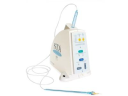
Sure. Well, there are enormous applications because whatever the hypodermic syringe can do, we can do. Now naturally, we're not going to do vaccines, but any subcutaneous injection we could do. So if you look at -- we evented labor and delivery first, because of the very high morbidity rate. I'm speaking now morbidity, not mortality, it's 4.5% to 5% in labor and delivery. However, labor and delivery is a relatively small market compared to pain management with epidurals. We can do that, as well. Also epidurals are used for operations of short duration, even under general anesthesia, so we can do that, as well. Botox is another area; Botox is pay-per-play, very expensive. And the fallout for people that want to use Botox for cosmetic purposes is due to the excruciating pain of injecting into the nose, the eyelids, so on and so forth; so we have an instrument that we can use for that. Now, we haven't pursued that because we were husbanding [ph] the capital for the epidural, now that we've raised the capital, we're looking into pursuing that, as well. Intra-articular injections are a much, much bigger market, and that's for osteoarthritis when you're placing hyaluronic acid because the synovial fluid has dissipated in the joint; synovial fluid is not replaced by the body, so the procedure calls for approximately seven years of continuing the patient with injections three to four times a year with hyaluronic acid or another drug, which will replace the synovial fluid, and it does that very well, eventually the patient would have a joint replacement. So in one instance, you can't do that in the small joints, the fingers and the hands, because it's excruciatingly painful. And the other instance in the large joint, the problem is finding the right location because when you're delivering a drug, for example, the epidural and the woman is in pain, the indication that you haven't placed in the correct spot, the catheter, is the fact that the woman is in pain, the woman is telling you that. When you inject in other areas unrelated to pain, you don't really know if you've injected in the right spot, possibly for weeks, whether it's -- it's not a systemic-like chemotherapy, but a drug going to a specific location. What we could do because of our multiple areas of finding the spot, one being pressure force feedback, the other is the pulse wave, we can assure the physician or nurse in real-time, whether they're delivering the drug in the real spot. So the answer is, anywhere where you want to significantly reduce or eliminate the pain of the injection or be sure that you're delivering the drug in the proper location. So the potential markets are enormous.