Milestone Scientific Inc. (MLSS) Q3 2022 Earnings Report, Transcript and Summary
Milestone Scientific Inc. (MLSS)
Q3 2022 Earnings Call· Tue, Nov 15, 2022
$0.44
+2.66%
Milestone Scientific Inc. Q3 2022 Earnings Call Key Takeaways
AI summary not available yet
Be the first to generate an AI summary of this earnings call. Takes about 20 seconds, and the result is saved and available to everyone afterwards.
Stock Price Reaction to Milestone Scientific Inc. Q3 2022 Earnings
Same-Day
+4.53%
1 Week
-13.03%
1 Month
-36.62%
vs S&P
-32.71%
Milestone Scientific Inc. Q3 2022 Earnings Call Transcript
OP
Operator
Operator
Good day ladies and gentlemen and welcome to the Milestone Scientific’s Third Quarter 2022 Business Update Call. At this time, all participants have been placed on a listen-only mode and the floor will be open for questions and comments after the presentation. It is now my pleasure to turn the floor over to your host David Waldman, Investor Relations. Sir, the floor is yours.
DW
David Waldman
Investor Relations
Good morning, and thank you for joining Milestone Scientific's third quarter 2022 financial results conference call. The company issued a press release this morning containing third quarter 2022 financial results, which is also posted on the company's website. If you have any questions after the call or would like any additional information about the company, please contact Crescendo Communications at 212-671-1020. On the call with us today are Arjan Haverhals, Chief Executive Officer, who will provide an overview of the financial results and recent developments for the third quarter ended September 30, 2022. Due to personal [indiscernible] Keisha Harcum, Controller of Milestone Scientific is unable to join the call today. So, Mr. Haverhals will also be covering the detailed financial discussion. Before we get started, we would like to remind everyone that during this conference call, we may make forward-looking statements regarding the timing and financial impact of Milestone's ability to implement its business plan, expected revenues, and future success. These statements involve a number of risks and uncertainties, and are based on assumptions involving judgments with respect to future economic, competitive, and market conditions and future business decisions, all of which are difficult or impossible to predict accurately, and many of which are beyond Milestone's control. Some of the important factors that could cause actual results to differ materially from those indicated by the forward-looking statements are general economic conditions, failure to achieve expected revenue growth, changes in our operating expenses, adverse patent rulings, FDA or legal developments, competitive pressures, changes in customer and market requirements and standards, and the risk factors detailed from time-to-time in Milestone's periodic filings with the Securities and Exchange Commission, including, without limitation, Milestone’s report on Form 10-K for the year ended December 31, 2021, the Milestone’s report on Form 10-Q for the third quarter ended September 30, 2022. The forward-looking statements made during this call are based upon management's reasonable beliefs as of today's date, November 15, 2022. Milestone undertakes no obligation to revise or publicly update any forward-looking statements for any reason. With that, we'll now turn the call over to Arjan Haverhals, Chief Executive Officer. Please go ahead, Arjan.
AH
Arjan Haverhals
Chief Executive Officer
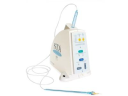
Thank you, David, and thanks to everyone for joining us today. I'm pleased to report we are back on the solid growth trajectory in the third quarter with sequential sales growth of 34.4% over the second quarter of 2022. In addition, our revenue for the third quarter of 2022 increased 28.6% over the same period last year without the benefit of sales to China. As we discussed last quarter, our dental segment faced temporary challenges in the second quarter of this year, due in part to the challenging situation in China and the Russia, Ukraine war. We believe we have, in large part, overcome these challenges as illustrated by the fact we achieved both sequential and year-over-year revenue growth for third quarter of 2022. The growth in revenue on both the domestic and international fronts reflects our successful decentralized multi-channel sales strategy. Importantly, we continue to add third-party dental distributors in international markets, which we believe will help further accelerate our growth. We look forward to announcing additional international distribution agreements as we continue to build our network across Asia, Africa, South America, and Europe. In the United States, we are working to bring on new strategic distribution and channel partners that sell through their respective networks of dental customers, especially in specialized areas of dentistry such as implant dentistry and aesthetics, as well as large dental service organizations or DSOs. DSOs play an increasingly important role within the domestic dental market. The current DSO market penetration of approximately 30% to 32% is expected to grow to 75% to 80% over the next 10 years. So to summarize, within our dental business, we continue to generate solid cash flow on a standalone basis. As we continue to grow our revenues, we expect to benefit from economies of scale due to the recurring nature and high margins on our disposables. Overall, our dental business remains strong. We are encouraged by the increased interest in our dental instruments and expect our momentum to continue. Turning to our Medical segment, we continued to advance our commercial efforts around the CompuFlo Epidural System and the CathCheck Verification System. As a result of our focused sales and marketing activities, we have trialed our CompuFlo Epidural System in key hospitals' healthcare systems and pain management clinics. As an example, in August, we announced the adoption of the CompuFlo Epidural System and its CathCheck capability at the University of Health, a leading academy health system based in Louisville, Kentucky. We are introducing CompuFlo across three distinct departments: labor and delivery, acute pain, and in the operating room. UofL Health owns and operates six hospitals and four medical centers, providing patient care to more than 1.5 million patients each year in the state of Kentucky. This is another important validation by a leading medical institution as we execute our strategy to become the new standard of care. With each health system we sign, we benefit not only from the sales, but also growing validation within the market. As part of our sales strategy, we are targeting several tier one university teaching hospitals. Some of these hospitals are among the Top 20 in the nation. We believe that as we begin to penetrate some of these larger, more recognized names, it will add greater credibility and reduce the sales cycle with smaller institutions. Our sales pipeline is solid and we are advancing discussions with a number of hospitals and healthcare institutions. We will provide further updates as soon as we commence formal commercial sales with these respective institutions. We also continue to introduce our CompuFlo Epidural System, targeting the pain management market, which not only includes hospitals, but also specialty centers, outpatient centers, and sports medicine centers. With over 11 million reported Epidural procedures each year, the pain market segment is more than twice the size of the labor and delivery market segments. Importantly, we recently announced the issuance of a CPT Code from the American Medical Association. This code goes into effect on January 1, 2023. The code will allow billing and payment pathways for healthcare personnel who choose to use our technology for coverage and discretionary payment by payers such as Medicare and Medicaid, as well as commercial health plans. Specifically, we believe that reimbursement will accelerate our commercial rollout by aiding in the financial decision process within particular, private pain clinics. We are actively preparing our reimbursement plan to take advantage of this new AMA cleared CPT code that will be implemented in the first quarter of 2023. In addition to our direct sales channels, we are also expanding our network of distribution partners. On the heels of receiving the CPT code, in August, we announced our partnership with CTI, a leading specialty distributor of medical products in the Midwest and East Coast regions of the United States. We believe CTI is an ideal partner bringing a sizable Midwest and East Coast sales force, extensive relationships with physicians, pain clinics, and hospitals, as well as a proven track record of introducing new medical devices. In Greece, our new partner, F&M Feed, is a leading provider of medical equipment devices and consumables. They bring over 40 years of experience in the field of healthcare having a successful track record, launching new medical devices and equipment. We look forward to announcing additional international distributors as we advance our commercial rollout. We also have invested heavily in our marketing initiatives to build brand awareness for the CompuFlo Epidural and CathCheck system and provide our sales representatives with the tools to be much more effective, including training videos, corporate brand videos, education, literature, digital marketing materials, and more. We continue to believe the Medical segment represents a large addressable market, not only driven by cost and convenience for the provider, was driven by the safety considerations and cost savings. These factors, coupled with the recent issuance of a CPT code will ultimately lead to the CompuFlo becoming the standard of care. Let me now take a moment to discuss some important financial initiatives we have undertaken. As announced last quarter, we continue to reallocate additional resources towards our medical segment, which we believe represents the future of the company. While increasing our focus on DSO and third party avenues of distribution in the dental segment. At the same time, we have reduced a number of operating expenses and certain corporate overhead in the third quarter, which is evident in the reduction in our burn rate. We expect to see the continued benefits of these cost reductions in the coming quarters, which should help drive us towards improved performance as we continue to grow revenue. Combined with our disposables, which provide high margin recurring revenue, we believe we are well-positioned to drive significant shareholder value for years to come. We ended the quarter with approximately $9.8 million of cash on hand and no long-term debt, which provides us sufficient capital to continue executing our business strategy, including accelerating market activities around both our dental and medical instruments. Given our strong cash position, we are also planning to launch new instruments and are pursuing new indications. So, to summarize, we have positioned our company for positive growth in the coming quarters. We remain confident in the market potential of the CompuFlo Epidural system, which we believe will transform the industry, and ultimately become the standard of care for Epidural procedures and labor and delivery, as well as pain management by providing patients with effective pain relief, while reducing the significant risk of complications with the associated costs. Importantly, we have begun seeding the market with our CompuFlo Epidural Instrument within a number of key hospitals, medical centers, and pain management clinics in the United States and Europe, and believe the issuance of CPT along with other steps we are undertaking will contribute to our long-term success. At this point, I'd like to provide a quick financial recap of our financial results for the three months. For a more detailed discussion, including our nine-month results, please refer to our Form 10-Q, which has been filed with the Securities and Exchange Commission. Total consolidated revenue for the three-months ended September 30, 2022, was approximately 2.2 million versus 2.1 million for the same period last year. Dental revenue increased approximately 130,000 as we expanded the partnership with new domestic and global distributors. Dental domestic revenue increased approximately $88,000 and dental international revenue excluding the Chinese market, increased approximately $403,000, compared to September 30, 2021. The company recorded no revenue from China in the third quarter 2022 as compared to approximately $360,000 for the third quarter of 2021. Medical revenue decreased approximately $23,000. Consolidated gross profit for the three months ended September 30, 2022, increased to approximately $1.5 million versus $1.4 million for the third quarter of 2021. Consolidated selling, general, and administrative expenses for the three months ended September 30, 2022, and 2021 were approximately $3.3 million and $3 million, respectively. The increase of approximately [$315,000] [ph] was a result of the increase in warehousing, quality control, and professional fees for regulatory and other services. At the same time, we reduced employee salaries and related expenses, as well as certain marketing and other expenses, which also decreased during the period. As I mentioned earlier, we have increased our focus in dental and third party distributors and reallocated additional resources towards our medical segments. Consolidated research and development expenses for the three months ended September 30, 2022 and 2021 were approximately $166,000 and $356,000, respectively. The decrease of approximately $190,000 is related to the delay of certain enhancement to the STA Single Tooth Anesthesia System. The loss from operations was approximately 2 million for the three months ending September 30, 2022 and 2021 respectively. The net loss was approximately $2 million or $0.03 per share for the three months ending September 30, 2022 and 2021 respectively. On September 30, 2022, Milestone Scientific had cash and cash equivalents of approximately $9.8 million and working capital of approximately $10.8 million versus working capital of $15.8 million on December 31, 2021. For the nine months ended September 30, 2022 and 2021, we had cash flows used in operating activities of approximately 4.9 million and 3.6 million, respectively. So, to wrap up, we believe we have developed a cost effective and highly scalable platform to drive growth within both our dental and medical divisions. We are witnessing growing interest in both our instrument and our disposals and we believe we are well-positioned to take advantage of the opportunities available in the market. Within our dental segment, we are back on a solid growth trajectory with sequential sales growth of 34.4% in the third quarter, compared to the second quarter of 2022. Year over year, revenue for the third quarter of 2022 increased 28.6% over the same period last year, excluding sales to China. As you can see, we continue to grow our dental segment and believe this business will not only contribute to our revenue growth, but also provide a steady stream of cash flow that will continue to help fund our initiatives within the Medical segment until that becomes self-sustaining on a standalone basis. Within our Medical segment, we have built a solid sales pipeline added hospitals, expanded our list on our distribution partners, and look forward to formal implementation of the new CPT code, which will support planned initiatives on the reimbursement front. At the same time, we continue to streamline our operating structure and remain committed to driving shareholder value. We are encouraged by the outlook of the business and look forward to providing further updates as developments unfold. I'd like to thank you for joining the call today. At this point, we would like to open the call up to questions. Operator?
OP
Operator
Operator
[Operator Instructions] Your first question for today is coming from Anthony Vendetti at Maxim Group.
AV
Anthony Vendetti
Analyst · Maxim Group
Thank you. Thank you, Arjan. I just wanted to talk a little bit more. I think it's a major deal to have a CPT code for the Epidural goes into effect January 3. So, right around the corner here, can you tell us what the actual code is, is it a temporary code that's good for five years and what the reimbursement amount is going to be at this point?
AH
Arjan Haverhals
Chief Executive Officer
Thank you for your question, Anthony, and good morning. So, the reimbursement code is defined as a pressure sensing guiding system during Epidural analgesia. So, what I'm always explaining is that we have been [indiscernible] a technology code, which is then called a Category III code, which is a temporary code. And to your point, yes, the trajectory is normally one to five years to make that from a Category III code, a Category I code. The beauty is that the healthcare personnel and providers that want to use our technology and sending in the building and the coding based on their cost structure they can already apply for a billing and coding to their local insurance company, so the Medicare and the Medicaid and the private insurance company. Now, in particular, what we do is in that whole process of the temporary code, which is, of course, a unique opportunity for the company moving forward because the future is extremely important and bright. If I look at the – just a simple fact that we have been issued and granted to that extent that technology code. But what we are doing then is with a number of clinicians that we have gone to work with is providing them with all the information that they need to be able to send it into the local insurance company. So that is for example paperwork that is needed like a letter of medical necessity, a letter of justification because as it is a new technology, you have to explain to the clinicians and the insurance companies what the benefits are of this technology, compared to existing technologies and also why it is so important to use our technology, compared to existing in technologies. Now, to the second part of your question, the pricing. We as a company, we cannot set the price to that extent. That is what the clinicians will do in their discussions with the health insurance company, but we can give guidance on, again on the paperwork that we are providing. And the goal is that they get recovering of the cost of the consumables, plus something extra and that something extra needs to be defined. What I can explain to you is if you look at the current reimbursement policies and the reimbursement fees, for example, Medicare in the New Jersey area for the private pain clinic, Medicare is reimbursing $304 for an Epidural procedure. On top of that, in addition to that, when the clinician is using fluoroscopy in that procedure, the clinician gets an additional $150. So, our goal is to so to say position ourselves between that $150 and $300 if everything works out to that extent. So that the private pain clinics or the clinicians in the private pain clinics get an additional opportunity to reimburse and to send in our documentation to the insurance company, i.e. are able to make more money. It is important for everybody to understand that because the issue really here is today in healthcare environment, everybody knows that just having a more efficient or safer technology is not sufficient to get adoption in the marketplace because clinicians need to have an opportunity as well to make money with a new technology. So that is the whole area and scale of where the CPT code and the CPT code reimbursement comes in. So, we are working hard in prepping all the paperwork and the documentation that we are needed. For example, we also will establish a hotline because if the clinician – when the clinician sends in the documentation to the healthcare insurance companies, to the healthcare insurance providers, you get either an acceptance or a denial. Now, we as a company are not allowed to negotiate with the insurance company directly about that denial or that acceptance of the insurance company. The only thing that we are able to do is provide services to the clinicians enabling him to come up with the right argumentation to make a denial and acceptance when he has sent in his papers for reimbursement, what we call the billing and the coding that he needs to submit to the healthcare provider. So, it is a rather interesting area. It is a fantastic area for the comp moving forward. It is a journey to that extent because things will change over time, but what is important for us is that we are able to set ourselves up to provide the right service to the private pain clinicians and physicians. Does that answer your question, Anthony?
AV
Anthony Vendetti
Analyst · Maxim Group
Yes, Arjan. No, that's great. And it sounds like you're doing everything from your end, providing the paperwork as well as the hotline for providers as they go through, because it's a new process for them with your particular device. So, helping them to make sure that they get properly reimbursed makes a lot of sense. In terms of now negotiations with customers, has that, sort of paved the way or made it easier at least, I know it's early, but at least from initial conversations, has it made it easier to sell the CompuFlo system now that there's a code right around the corner here?
AH
Arjan Haverhals
Chief Executive Officer
Thank you for your question. Yes, I've been, as I always do, I've been pretty extensive in the fields as well. So, enjoyed several meetings during weekends. There was the American Society of Anesthesiology; 10 days ago there was the New York, New Jersey, American Society of Interventional Pain Physicians. But I can share with you just a simple fact that we were able to announce that we have a temporary code. The code, it's called [0777] [ph], which I already explained earlier is opening doors that normally stays – are staying close. people, just a simple fact that we are having clinicians. Also, the industry in general is looking at us and is impressed that we as a smaller entity have been able to get awarded that temporary code. Now, the second part of course is, yes, it will definitely open up a lot of opportunities with some ASCs, so ambulatory surgical centers, as well as private pain clinics. And it also opens up to work together with them because they are eager and enthusiastic to be part of establishing a reimbursable fee for this technology to be used within their practices. So, it's definitely, I would say, it's definitely a win-win for both the company and the clinicians, but more importantly, of course, for the patient because at the end of the day, we've proven quality of life for patients that is still one of the main motivation factors for our company and every person that is working and representing Milestone Scientific.
AV
Anthony Vendetti
Analyst · Maxim Group
No, I agree. I mean, it should become the standard of care. Just lastly, you said you have enough cash to explore new products and applications. I know, we've discussed in the past, I was wondering if you can remind us, which applications might be at the forefront now, which ones are you starting to contemplate pursuing at this point?
AH
Arjan Haverhals
Chief Executive Officer
Yes. So, the applications there, like I explained several times as well, they are numerous, right. As we speak, we get requests from other companies to look into different areas. We have been granted a patent in peripheral nerve block in Europe. We recently also have been granted a [patent] [ph] in the U.S. for peripheral nerve block. So, peripheral nerve block is potentially on our rated screen. We talked about neurology in general for [specificity] [ph]. We have a cosmetic patent for botulinumtoxin in cosmetic medicine applications. We have, of course, into articular. So, the opportunities are numerous here. I also do believe that that could potentially be interesting areas to further discuss with potential cooperation partners, not that we have identified them to further explore these opportunities. One thing of course is developing a new technology within a certain indication area, but we also have to make sure that you have the means to sell the products that come out of the research and development pipeline, and that you are able to commercialize that and launch that and can enjoy the revenues for that. So, the only thing that we have said in the Q, in the current Q and if you’ve heard my comments this morning, short-term, we are looking at some enhancements of the STA dental instrument. We have not kicked-off a major R&D project within the medical area. And like I said, we are still looking into the potential and the high priorities and prioritizing several opportunities. I also would like to bear in mind of everybody joining us on this call. Of course, we still remain a smaller sized company where each employee is wearing three to five hats. So, I always say to my team we better execute on the things that we can execute on and we do it right instead of taking too many things on our plate that would be difficult to execute on within the given time frames.
AV
Anthony Vendetti
Analyst · Maxim Group
Okay. Thank you for all that color. Arjan, I'll hop back in the queue.
AH
Arjan Haverhals
Chief Executive Officer
Thank you. Thank you, Anthony.
OP
Operator
Operator
[Operator Instructions] Your next question is coming from [John Korb] [ph], a Private Investor.
UA
Unidentified Analyst
Analyst
Hello.
AH
Arjan Haverhals
Chief Executive Officer
Good morning, John.
UA
Unidentified Analyst
Analyst
Good morning, Arjan. How are you?
AH
Arjan Haverhals
Chief Executive Officer
I'm doing well.
UA
Unidentified Analyst
Analyst
Good. I wonder if you could help me understand where milestone is as a company, and how this rollout might have changed and how your expectations in the beginning were maybe not correct because you went from 10 salesmen to 5, I'm not sure if you even have the 5, what happened there and how has your view going forward changed from the original time when you started out with that sales force of 10 and then it, kind of dragged on and on and then you cut back to marshal your resources and save costs? And where are we now? I have a bunch of questions and I don't want to jump them all up, but help me understand, let's say you go into the university or the system at Louisville, introduce it. Then what happens? Does it just sit in the hands of one person? Are they actually using this CompuFlo system or where does that go when a hospital accepts your technology? Do they say, we can't do anything until we get the code or help me understand where we are with all that, please.
AH
Arjan Haverhals
Chief Executive Officer
Absolutely. And thank you for your question, John. So, in a way, you asked two questions, let me start with the first one. You're absolutely correct that my initial vision was to build up a direct sales force with 10 people, at a certain moment, we had 11. And then as I announced in the prior quarter, we parted ways. We just not only in-light of cost measurements, but more importantly also of performance issues taking too much time, not necessarily having the right yes, attitude and the right skill set to sell the products directly. Now, what we should not forget at that time, we also were able to do that because we liaised with CTI. And CTI has presence in 22 states. They have about 32 sales reps. We have trained the entire organization of CTI. So, instead of having 10 direct sales reps in my organization, I now still have four and I have a group of 30 plus feet on the ground through CTI that are representing us and that will definitely help us not only with the penetration in the marketplace, but also on our cost side, on the balance sheet, right. So that's one part of the comment. Your second question, for example, University of Louisville in Kentucky. The process is, absolutely our person in the field, he has done a tremendous job in being very persistent just to give you again a flavor that is the process of getting eight weeks prior to getting a trial. We've done the trial with them at that time. We were vetted. We have had meetings with the CFO of that hospital and we were able and they were pleased with our technology and we were able to be approved in that hospital. Now, the process of course is, and your question is, how will it look like from an ordering pattern point of view. In this case, the University of Louisville, Kentucky, they placed an initial order, which I would call a high volume order. So, they started in August and they placed an order of 200 consumables. So, in other words, 200 procedures they immediately committed to and they are working through that volume. In the first 2.5 weeks, they did about 3.5 – in the first 2.5 weeks, sorry, they did about 30 cases in the ramp up. And normally, what you see in these hospitals they will use it for typical cases in complications, so either patients with a high BMI or other patients that have complications with epidural procedures and then rolled it out to a higher acceleration pattern for daily clinical routine use. That's where our salespeople come in, in making sure that there's enough product on the shelves and that they are continuing to use their – our products every time when a patient comes in. So, what people always ask me, why isn't not that they go from one day to the other day and penetrate for 100% their clinical department? [A clinic] [ph] the anesthesiology department, it's probably everything between 10 to 15 anesthesiologists. You normally have two to four champions that are championing and using the technology. So, when our sales guy has been able to get it approved in the department, he still has to work also with the other anesthesiologists, thereby increasing the volume. But the University of Louisville, Kentucky using it in the [OR room] [ph] in labor and delivery and in pain. That's of course gigantic for the company and also very positive what I expect for the next purchase orders that are coming that way, our way, sorry. A good example also is, UTMB, where they a year ago initially got it approved for patients with high BMI. So, they went around that they wanted to have it in their teaching institution facilities. And now after they have done that, now they can enter that area where they can use a product for daily clinical routine use. So, I hope that that answers your questions and shined some lights on the question that you post.
UA
Unidentified Analyst
Analyst
It does. Thank you. I have an additional question. You have used the word and I believe it this is how it might play out. You've used the word snowballing that to get it started in various places is the most difficult. And then it might snowball because new prospects are told, while Louisville is using it, and others are using it, contact them and find out how they like it. and then the sales are easier and they're beginning to grow in a hockey stick effect. Is that still what you're looking for?
AH
Arjan Haverhals
Chief Executive Officer
Yes. But let me explain it in more detail. Absolutely. Do I believe in the snowballing effect or the domino effect when we get institutions like Louisville or larger in institutions that we are working with also closing the area where we are situated in. Absolutely, I believe in that. What we should never forget is the long decision-making process that is taking place in these hospitals. We were recently in Texas. It took us nine weeks just to get registered to be able to do a trial. So, yes, I do believe in this noble effect if we are and when we are able to get more institutions that's supporting and are using our products. Absolutely. However, what is even more importantly, I strongly believe in that we have a second pathway or a third pathway, the second pathway being with the reimbursement code the entrance of the pain market segment. That will definitely be a very important driver for growth for the company moving forward. And why is that? You do not have that decision making process from, let's say, six to nine months. You do not have to go through a committee. The owner of the pain clinic can a make the decision right away. There are no necessarily immediately financial constraints. And thirdly, the direct benefit for the private pain clinic is that he can make money with a technology that we are offering. So, all-in-all, let's say, a year ago, we were very much so dependent on one, yes, roll through market, I always call it, which was labor and delivery in the hospital centers. In the mid-size, the larger the regional with the longer decision-making process. A year later, thanks to a CPT code and thanks to other things that we have undertaken. And thanks to being granted that code, we are now in an opportunity to have a really, really unique selling proposition for the private physicians and the private clinicians. Now, to your point, to that hockey stick at a certain moment in time in 2023, there I expect to see then that uptake of all these parameters going together and the execution of the strategy that we are currently undertaking that will then result in the medical revenues the company. So, I do believe that apart from the snowball effect that I probably mentioned in one of my earlier calls that snowball, the initial size of the snowball is getting bigger and I expect much more out of that in 2023.
UA
Unidentified Analyst
Analyst
So, then if I understand you correctly, the immediate hope and trust of milestone is to work with pain clinics, get that going to a great degree and the Epidural and hospitals might take a little longer. Do I understand you correctly?
AH
Arjan Haverhals
Chief Executive Officer
Yes, but don't forget that we already have been in these hospitals, so we will continue working with the hospitals and we have a number of hospitals right now where we are in trialing and evaluation. So, I'm not saying we give up labor and delivery, absolutely not. My point is that we are going to do that in parallel and both of them are important, but short-term decision making process is definitely an advantage in the private pain clinics, compared to the hospital. So, I would expect that we have faster results within a private pain clinic as there is a shorter decision-making process than in the hospitals for labor and delivery. And of course, in the hospitals, we will also go into the pain clinics, and into the operatory room. It is just the process internally is different between these two entities. That's more my point. So, one does not exclude the other, not at all, but we are better positioned to take more benefit of both market segments, compared to a year ago.
UA
Unidentified Analyst
Analyst
Okay. I guess I understand a little better. I must say, I'm a little disappointed in the length of time the rollout has taken and maybe you are too. I'm not sure. But as a firm believer in this product, I guess it's a long-time shareholder. I expect that the embracing of this new technology to be at a faster track. Are we on the threshold maybe of that in the coming year or so or is it still going to be more of a [drawn up] [ph] process how do you envision it?
AH
Arjan Haverhals
Chief Executive Officer
No, I think that we are in – like I said during this call this morning, I think we are in a good position, I think we are in a better position, then if I may, I'm allowed to say so a couple of years ago, as we have more arguments, initiatives, and strategic options at our hand. We should also not forget that we have submitted an FDA for an indication widening, so that we are not only focusing on lumbar and thoracic and cervical. Of course, it's out of our control the timing of the FDA and what they will come up with. But those things are important because the unique benefit of our technology in the lumbar spine are known, but the benefits of our technology in the thoracic and the cervical spine are even higher and everybody understands that immediately because the mobility rates are much higher, the higher you enter the spine, right? Lumbar spine mobility rates are 5%, thoracic 17%, and cervical is 30% to 32%. So that gives us also unique opportunities. And you mentioned that you were disappointed that it took a little bit time. I would say, I'm pleased with what we have been able to achieve, in particular, in the last year compared to where we were a year ago with the opportunities we have in the marketplace.
OP
Operator
Operator
There are no further questions in queue. I would like to turn the floor back to Mr. Haverhals for any closing remarks.
AH
Arjan Haverhals
Chief Executive Officer
Yes. Well, thank you very much for your time and I enjoyed the questions and the sessions. And please do not hesitate to contact me personally in case you have additional questions. And like I said, I think we are in a good position to continue to create shareholder value in the coming months and years. And I wish you a very good Tuesday. Please stay safe and I'm sure that we will meet again and talk to you soon. All the best. Bye-bye.
OP
Operator
Operator
Thank you ladies and gentlemen. This does conclude today's conference call. You may disconnect your phone lines at this time and have a wonderful day. Thank you for your participation.